Feng Shui AR · iPhone and iPad
A Feng Shui app that shows your home’s flow
Walk your home with your phone. Feng Shui AR maps it from the front door, shows the flow as light across your floor, and names where form school says it is blocked.
Coming soon to the App Store · iPhone and iPad
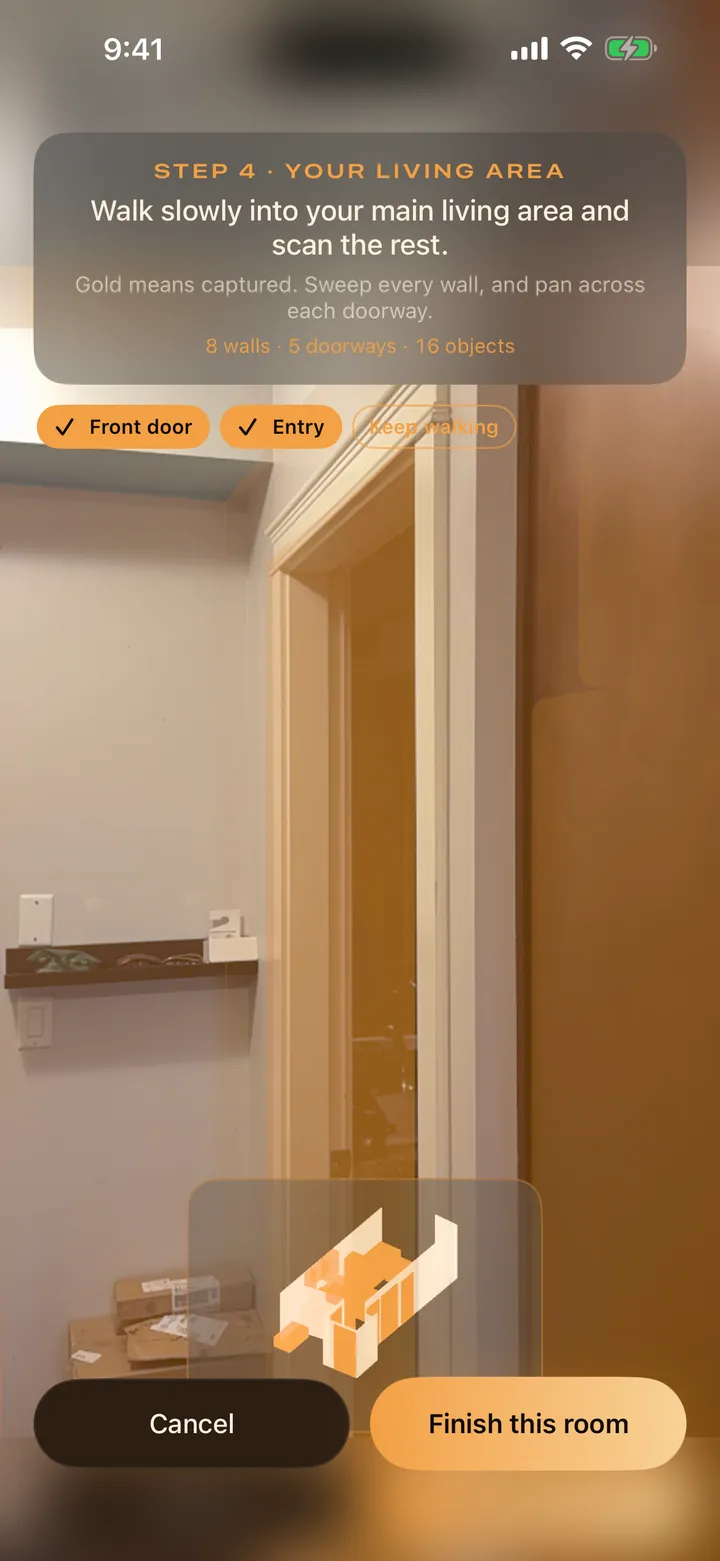
Stand inside the front door and walk the home. LiDAR devices map rooms as you go; others mark corners by hand.
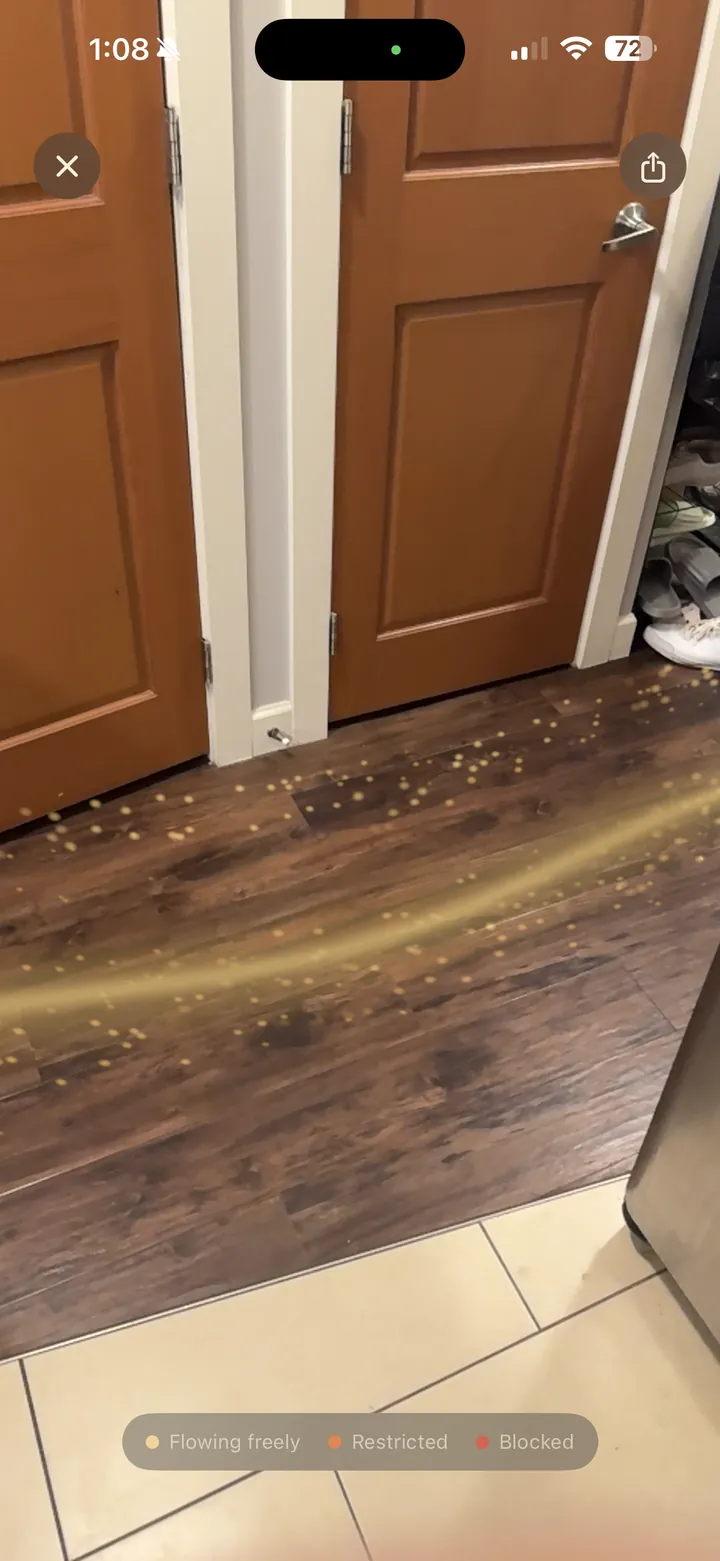
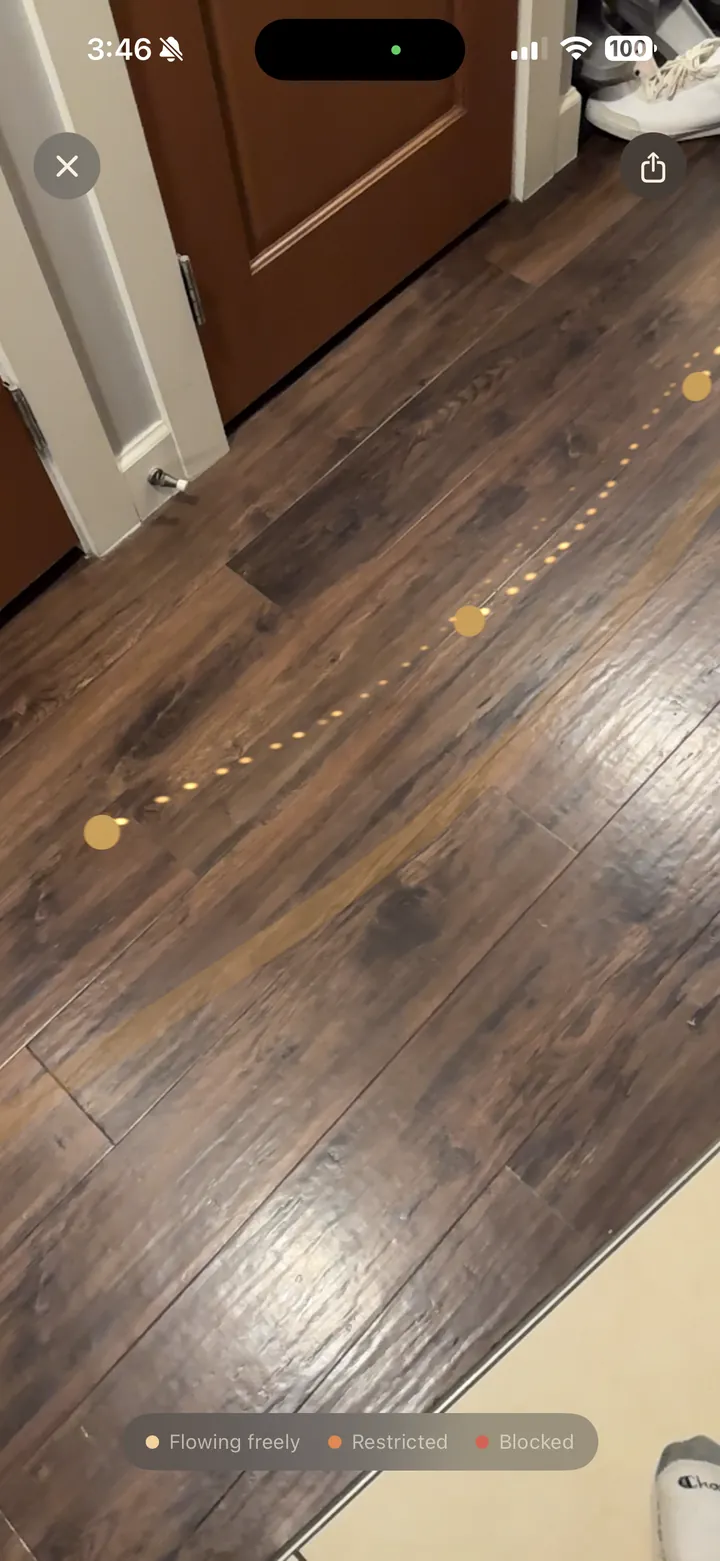
The flow appears as light moving across your own floor, from the front door into every room it can reach.
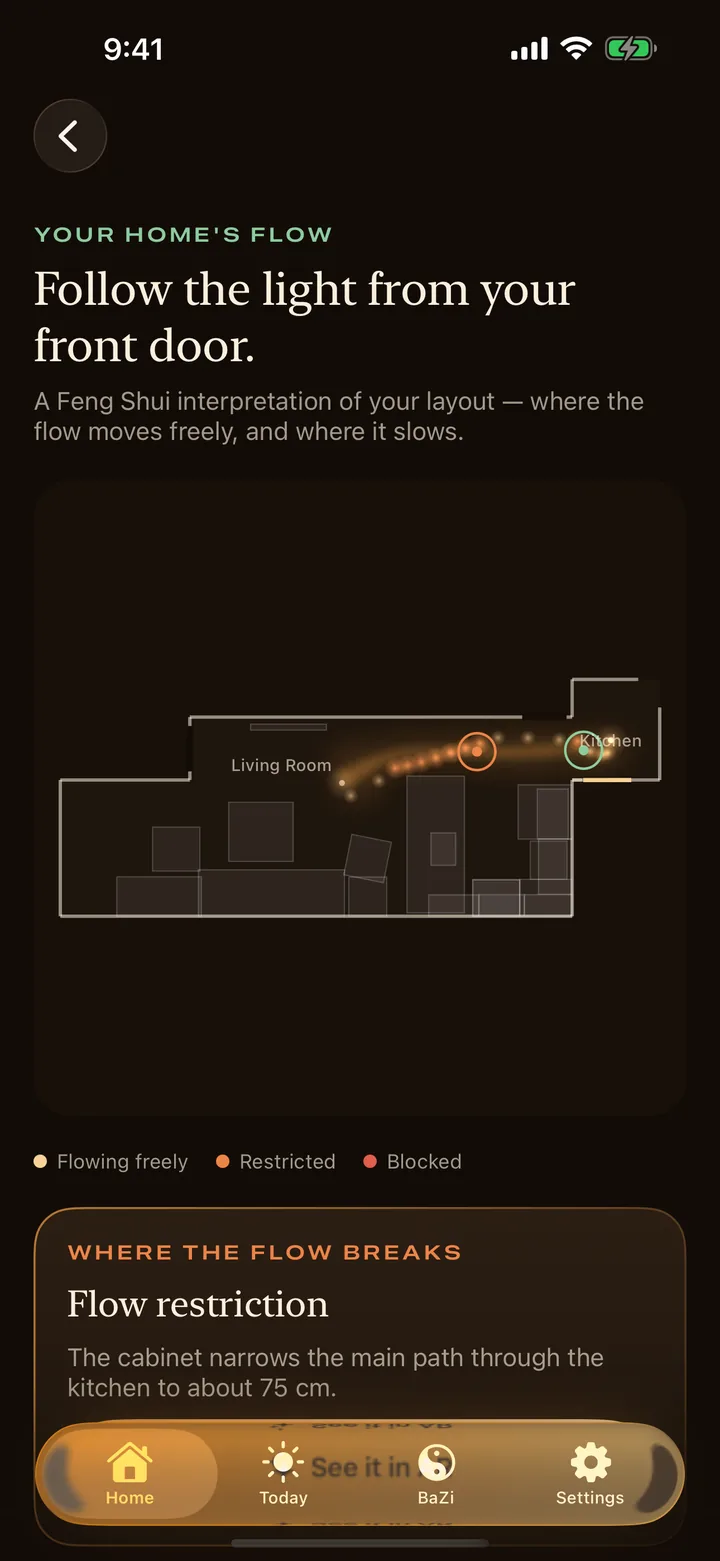
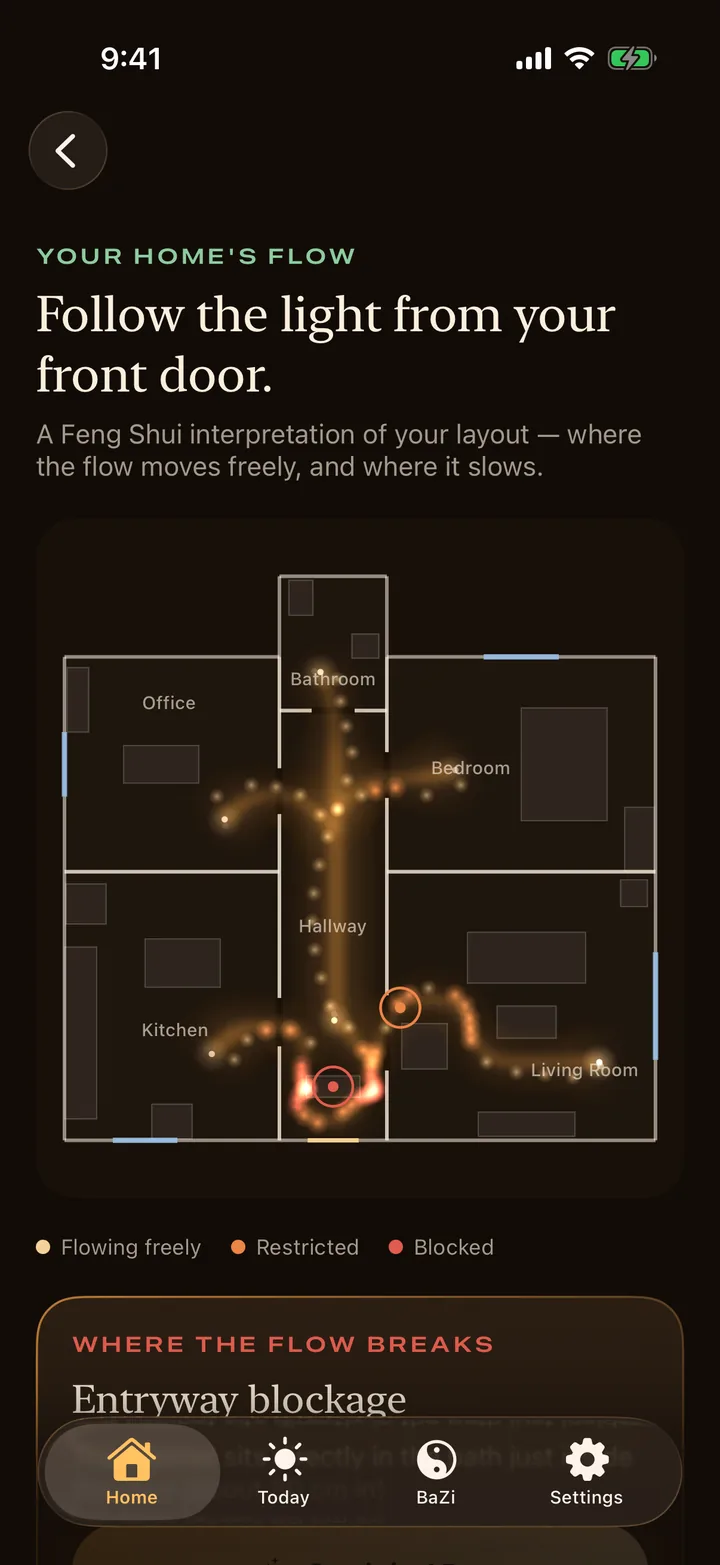
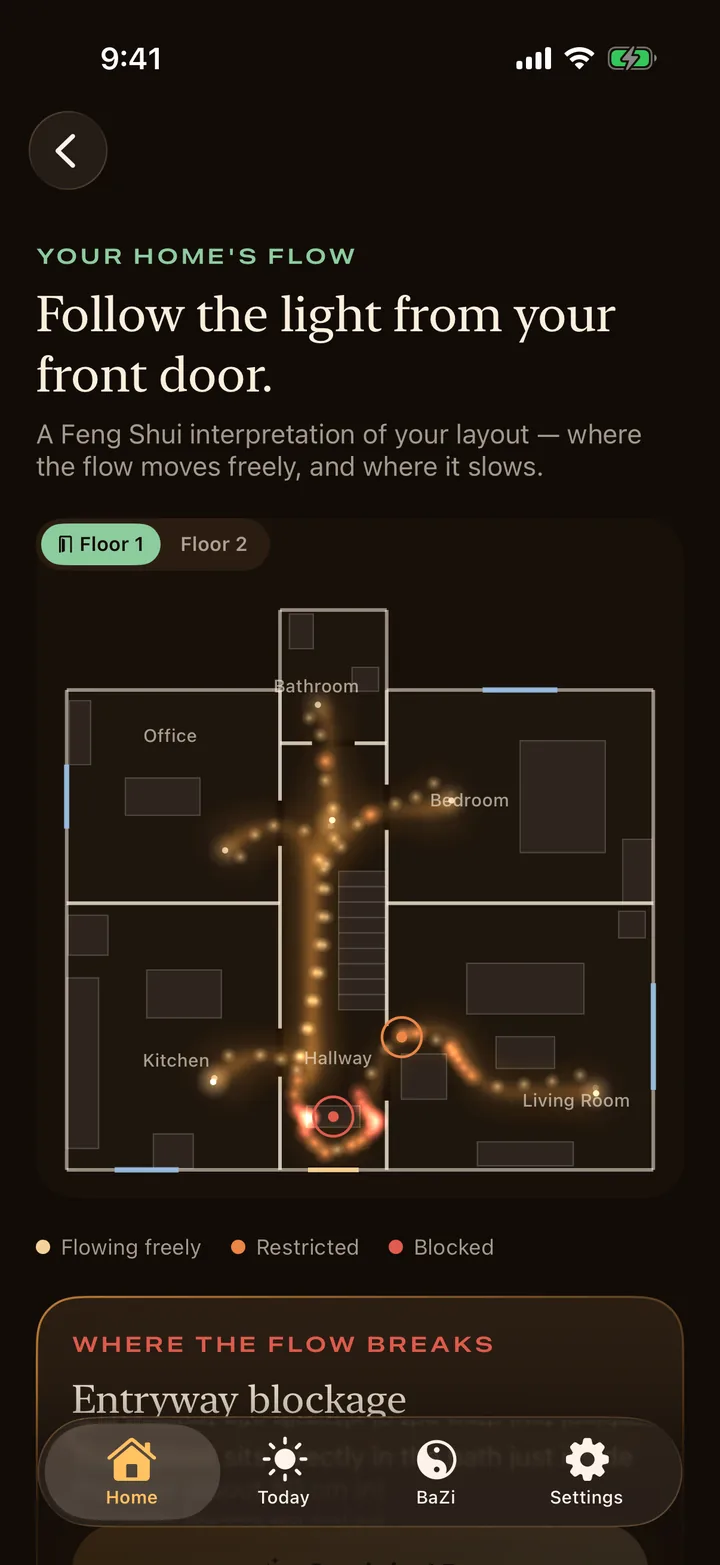
Each place it slows or stops is named on the plan: a cabinet in the entry, a passage squeezed to 75 cm.
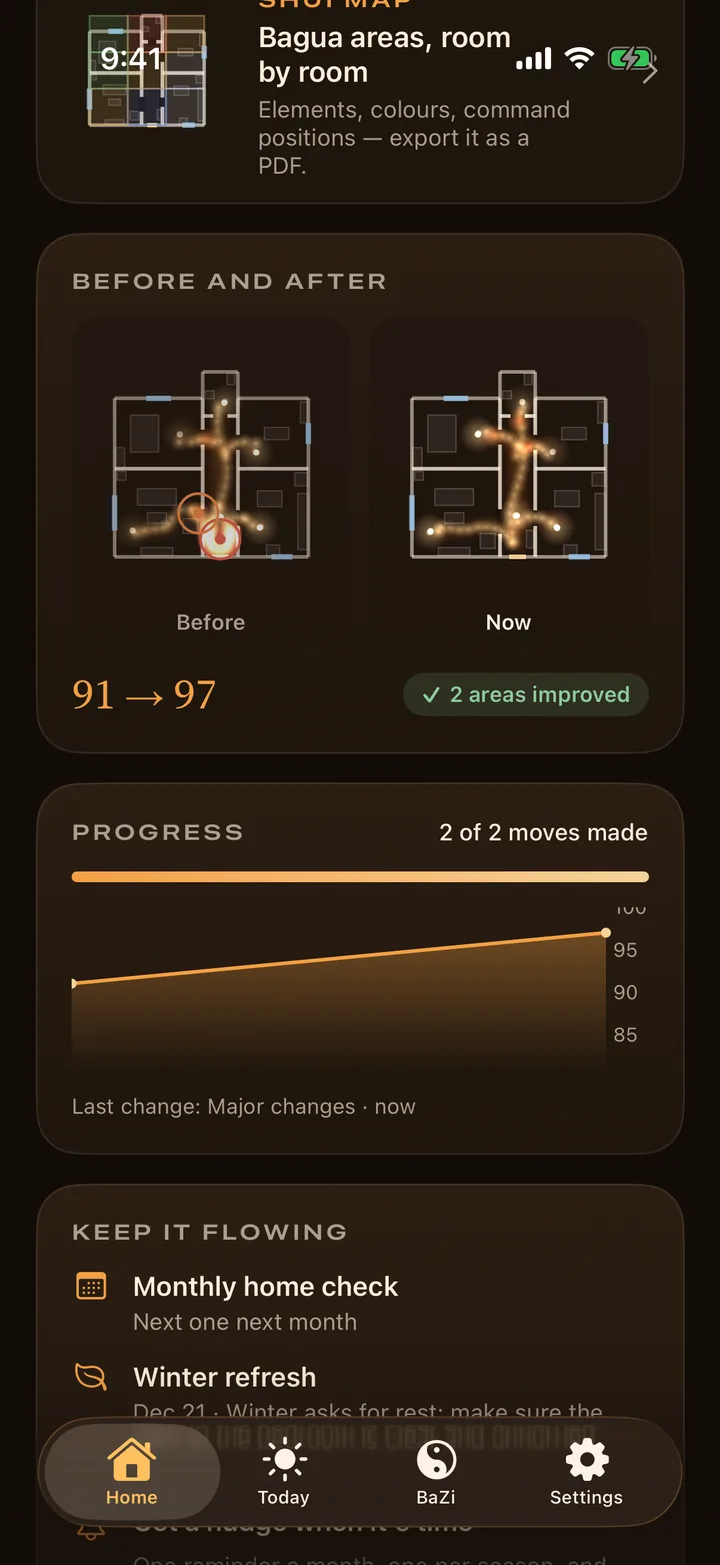
Try the suggested moves, scan again, and compare the before and after plans and scores.
Free tool
Check your bed position now
Set where the door, the bed and the window are. The tool applies the same command-position rules the app uses, in your browser.
Feng Shui AR
A tool checks one bed in a sample room. The app measures your actual bedroom: the door, the windows, every piece of furniture, and the flow through the whole home.
Before and after
Small moves, read by the rules
Four common layouts and the change form school would suggest, each tied to the rule the app applies.
A bed on the door’s wall
 Before
 After
AfterRule: Command position
Before. The headboard is on the same wall as the door, so from the pillow the door is beside and behind you.
After. The bed moves to the far wall. The door is in view on a diagonal and the headboard has a solid wall behind it.
An entry that narrows at the door
 Before
 After
AfterRule: Entryway blockage
Before. A deep console and loose shoes take up the first steps inside the front door.
After. A slimmer console sits flush to the wall with the shoes on its shelf, and the path in is open to its full width.
Blocked Entryway in Feng Shui → Feng Shui Floor Plan Self-Check →
A desk across the way in
 Before
 After
AfterRule: Flow restriction
Before. A desk stands behind the sofa, across the route from the front door into the living room.
After. The desk moves to the corner by the window and the route in from the door runs clear around the sofa.
Feng Shui Living Room Layout → Feng Shui Floor Plan Self-Check →
A desk facing the wall
 Before
 After
AfterRule: Command position
Before. The desk is pushed against the far wall, so whoever sits there has the door behind them.
After. The desk is turned to face the room. The chair has the wall behind it and the door is in view.
Feng Shui Home Office Layout → Feng Shui Desk Placement Tool →
Illustrations of the layout change, rendered for this site: not photos of a real home, and not app screens.
The flow
See your home’s flow
Form-school Feng Shui reads a home by the path from its front door: where it moves freely, where it squeezes, where it stops. Feng Shui AR draws that path on your floor plan and then shows it in the room itself, as light moving across your own floor.
- The path starts at your front door and runs through every room it can reach.
- Gold where it moves freely, amber where it is restricted, red where it is blocked.
- Shown in AR, so you see the pinch point where it is, not on a diagram.
Every floor
Every floor, mapped
A house with stairs is scanned in one go: on iPhones and iPads with LiDAR, keep scanning as you walk up. Each floor gets its own plan, drawn straight and square, with a switcher above it. The flow and the findings are read from the floor with your front door, because form school reads a home from where you come in.
- Stairs drawn on the plan, and flagged if they rise straight ahead of the front door.
- Upstairs shown as its own plan, not stacked over the floor below.
- Without LiDAR, hand-mapping covers one floor.
The reading
Discover flow blockages
The result names what it found and where: a cabinet in the first step inside the door, a passage narrowed to 75 cm, a bed in line with its door. Each finding is worded as what tradition says about it, with the usual remedy.
- A Home Flow Score out of 100, built from entrance, circulation, connectivity, furniture placement and continuity.
- Beds and desks checked against the command position.
- The Bagua map laid over your plan, by front door or by compass.
The fix
Fix your flow
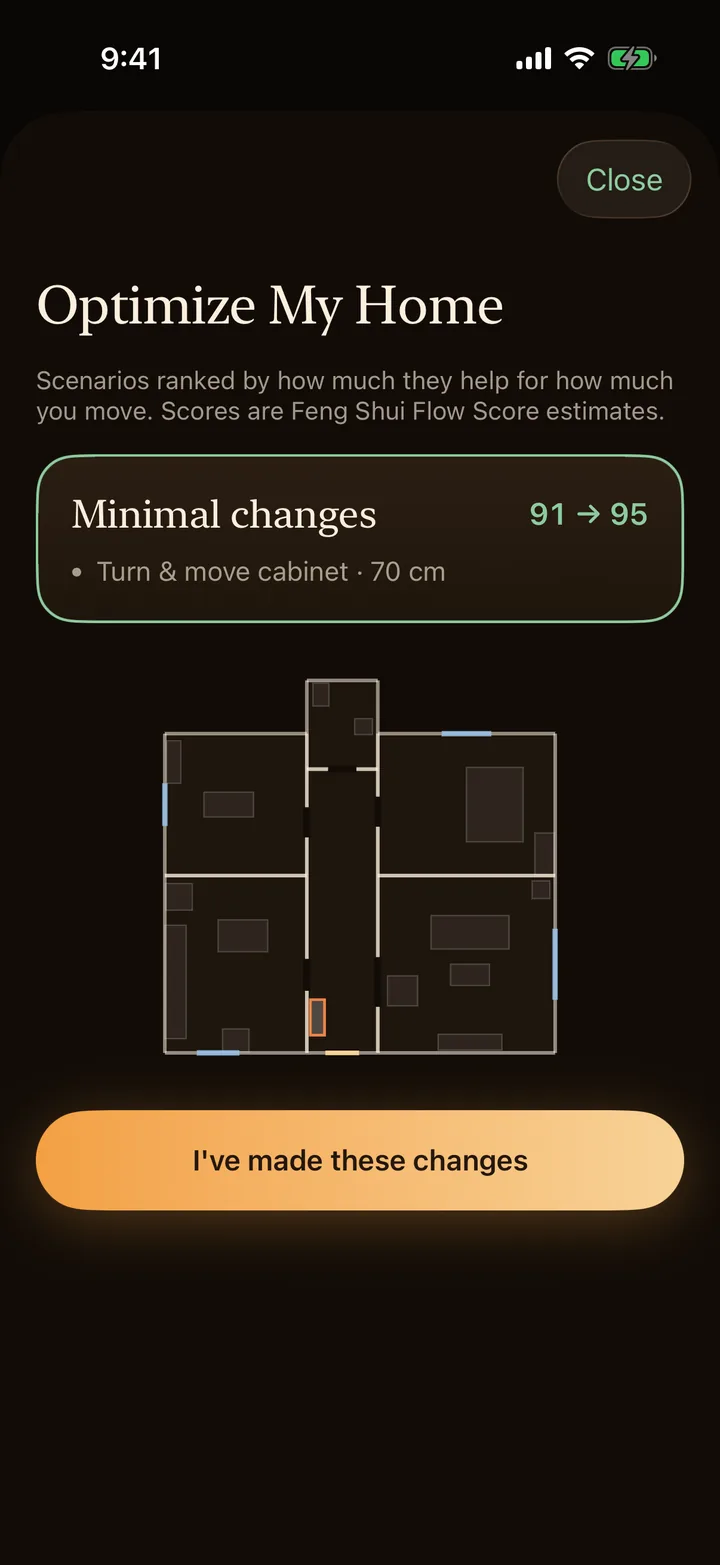
Optimize My Home ranks changes by how much they help for how much you move: turn the cabinet, shift a chair 90 cm. Preview a move in AR before you lift anything.
- Minimal changes first, bigger ones after.
- Each scenario shows the score it would lead to.
- Placement ideas too, such as a plant where a line needs breaking.
You
Make your home personal
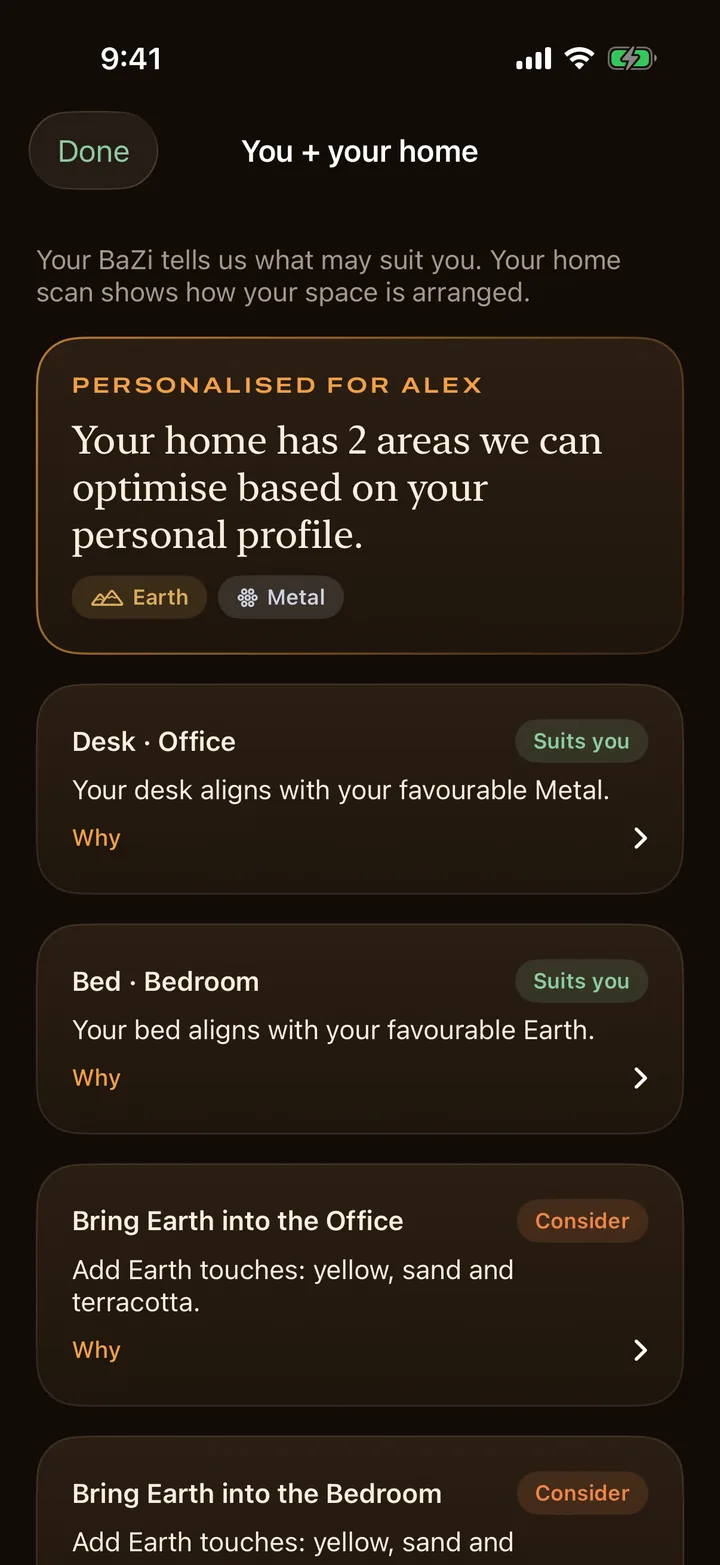
Add your birth date, time and place and the app works out your BaZi chart: Four Pillars, Five Elements, the elements said to favour you. With a compass heading it then looks at where your bed and desk sit and which way you face.
- Favourable directions, colours and materials for your chart.
- A note for each bed and desk: keep it, or consider turning it.
- Daily, monthly and yearly readings, luck cycles and compatibility.
The tradition
What is Feng Shui?
Feng Shui is a Chinese tradition of arranging buildings and rooms. Its oldest branch, the form school, reads a place by its shape: where you enter, how you move through it, what stands in the way, and whether the places you rest and work feel supported. Other schools add the compass, the calendar, and the person.
It is an interpretive practice, not a science, and this app treats it that way. What it adds is measurement of the layout the tradition is talking about: your door, your walls, your furniture, to scale.
Explore
Feng Shui, room by room
Plain answers to the questions people actually ask, each one leading to the same place: what it looks like in your home.
Problems
Is this bad Feng Shui?
The specific worries: what tradition says, how much it matters, and what to do when you cannot move anything.
Tools
Work it out in your browser
Free calculators that use the same rules as the app. Nothing you enter leaves the page.
BaZi + Feng Shui
The place, and the person
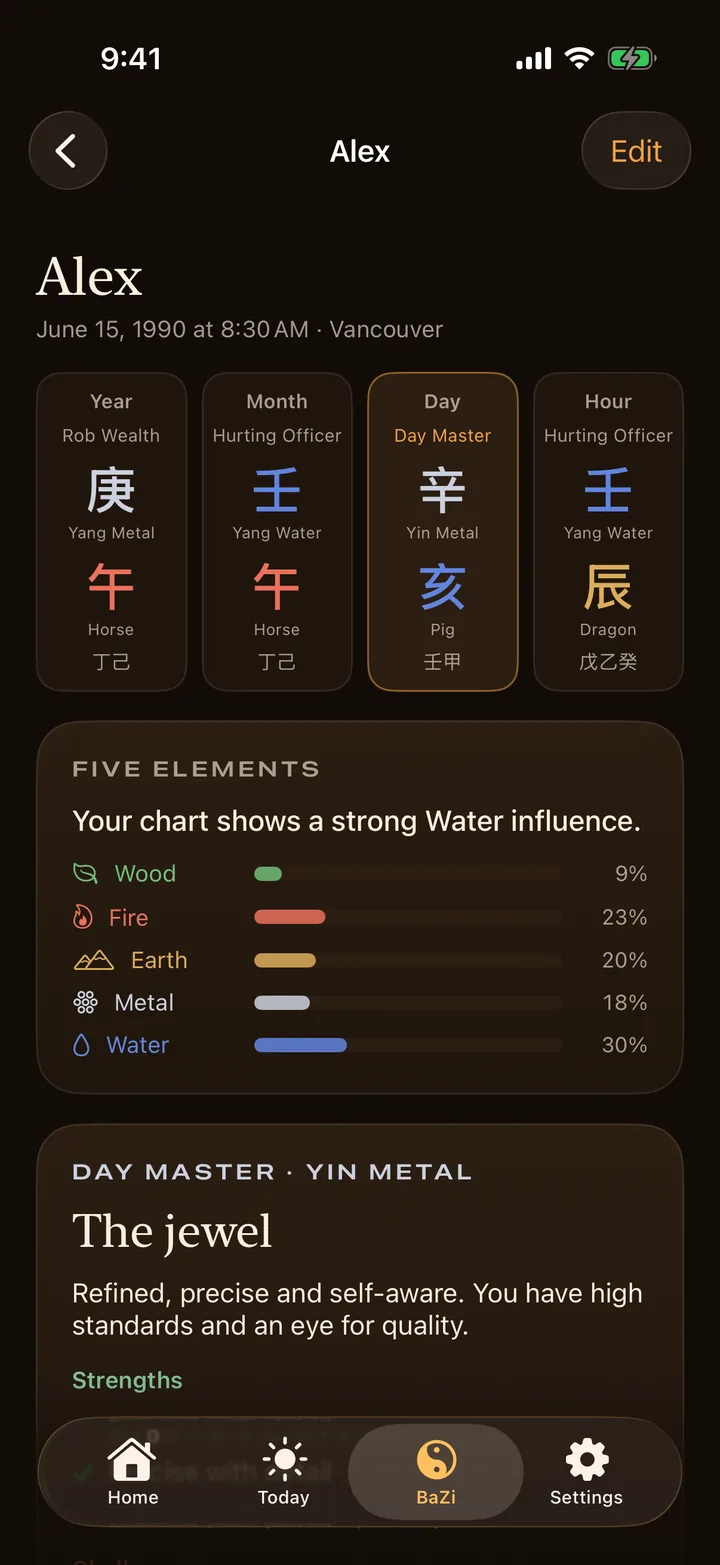
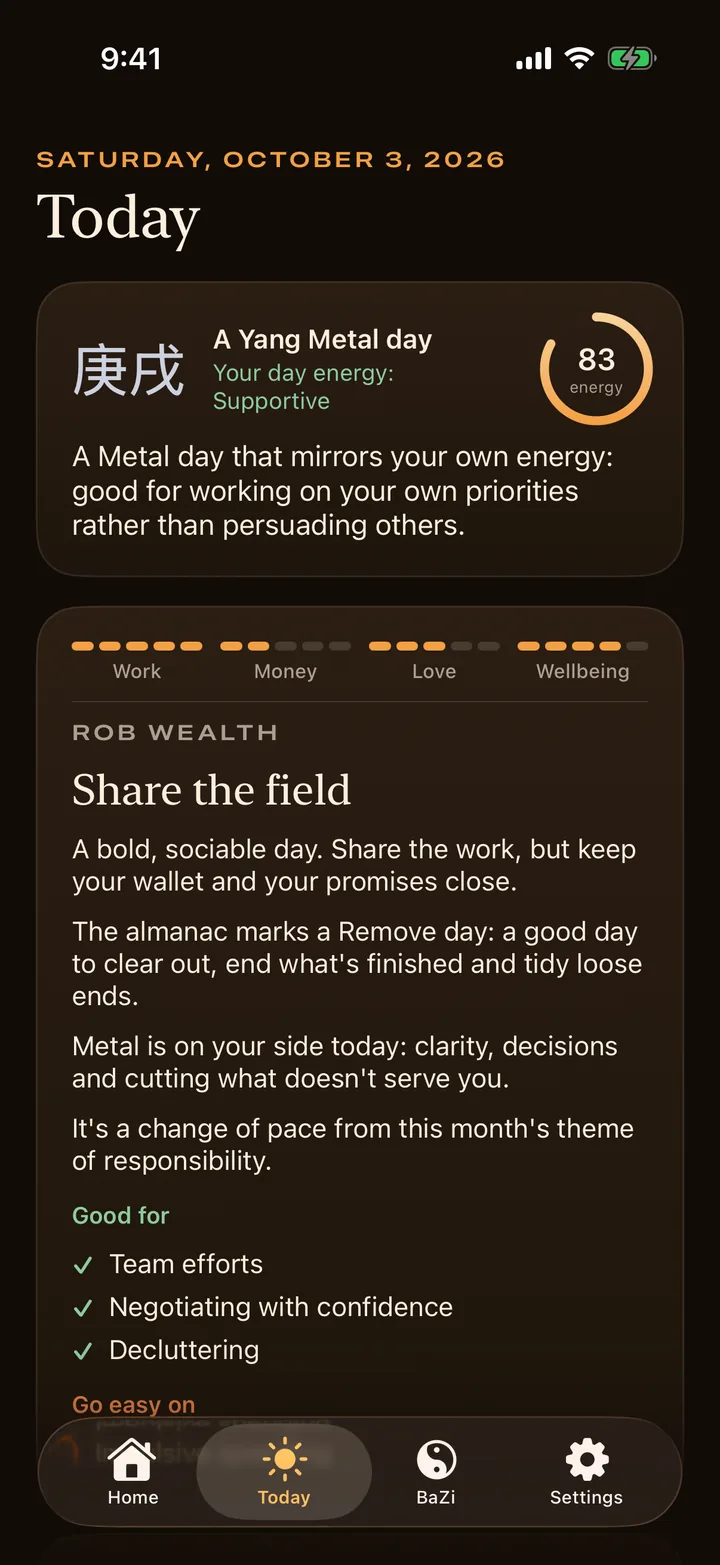
Feng Shui reads the home. BaZi, the Four Pillars, reads the person from their birth date and time. The five elements are the bridge: a chart’s favourable elements have directions, colours and materials, and those can be applied to where you sleep and work.
- Your Four Pillars chart and five-element balance.
- A daily reading with what the day is said to suit.
- Compatibility between two charts, side by side.
Questions
Is Feng Shui AR on the App Store?
Not yet. It is coming to the App Store for iPhone and iPad, in English, Simplified Chinese and Traditional Chinese. It was called Feng Shui Scan while in development. These pages will link to the listing the day it is out.
Do I need an iPhone with LiDAR?
No. iPhones and iPads with LiDAR scan rooms with Apple RoomPlan as you walk. On other devices you map each room by marking its corners and doorways by hand. Either way the map starts at your front door.
Does the app measure qi?
No. Feng Shui and BaZi are traditional interpretive practices. The app applies their rules to your floor plan and your birth details; it does not scientifically detect qi, and its readings are not medical, financial, legal, psychological or structural advice.
What does the scan actually check?
Form-school layout: what stands just inside the front door, whether the door lines up with a window or another door, what the door looks at, stairs rising straight ahead of it, where furniture narrows or cuts the path through the home, crowded rooms, dead ends, rooms the path cannot reach, sharp corners aimed at a bed, sofa or desk, and whether beds and desks are in the command position.
Can it scan a house with more than one floor?
Yes, on iPhones and iPads with LiDAR. Keep scanning as you walk up the stairs and each floor gets its own plan, with a switcher above it. The flow, the Bagua and the findings are read from the floor with your front door. Hand-mapping, on devices without LiDAR, maps one floor.
Where are my floor plans and birth details stored?
Only on your device. There is no account and no cloud sync. Camera frames are processed on the device and are never uploaded or stored; only the resulting floor plan is saved. The free version shows ads and the app sends a few anonymous usage events and crash reports; the privacy policy lists exactly what leaves the device.
What does it cost?
The free version analyses the first room of a home and includes one BaZi profile plus one other person and a basic daily reading, with ads. Pro is US$9.99 a month or US$39.99 a year, each with a 3-day free trial for eligible new subscribers. A one-time purchase of US$14.99 unlocks the complete analysis for one home. Your own App Store shows the local price.
You’ve read about the problem. Now see whether your home has it.
See your home’s flow
Scan from the front door, follow the light, and find out where it stops.
Coming soon to the App Store · iPhone and iPad